

Can Mini Splits Be Installed in the Ceiling?

Most mini split systems are mounted on walls, but that’s not the only option. For homeowners who want a cleaner look or need to save wall space, ceiling-mounted mini splits offer an efficient and discreet alternative that blends into the room’s design.
Mini splits can be installed in the ceiling using recessed cassette units or surface-mounted suspended units. These ceiling-mounted systems provide efficient heating and cooling while keeping the indoor unit discreet and out of sight, ideal for rooms with limited wall space or modern aesthetics.
Wondering which type of ceiling unit is right for your space? In the sections below, we’ll break down the different ceiling-mounted mini split options, key pros and cons, installation requirements, and how to decide if this setup fits your home’s layout and design goals.
What is a Ceiling-Mounted Mini Split?
A ceiling-mounted mini split is a ductless HVAC system where the indoor air handler is installed either inside the ceiling (recessed) or onto the ceiling surface (suspended). These units are designed to deliver similar energy-efficient performance as wall-mounted mini splits (standard tier), but with less visual impact.
Ceiling units are particularly useful in spaces where walls are occupied by windows, furniture, décor, or simply when a more seamless design is preferred.
Types of Ceiling Mini Split Units
Mini splits designed for ceiling installation come in two main forms: a) recessed ceiling cassette units and b) ceiling-suspended units. Each type is suited for different architectural and aesthetic needs.
Ceiling Cassette Mini Splits (Recessed Type)
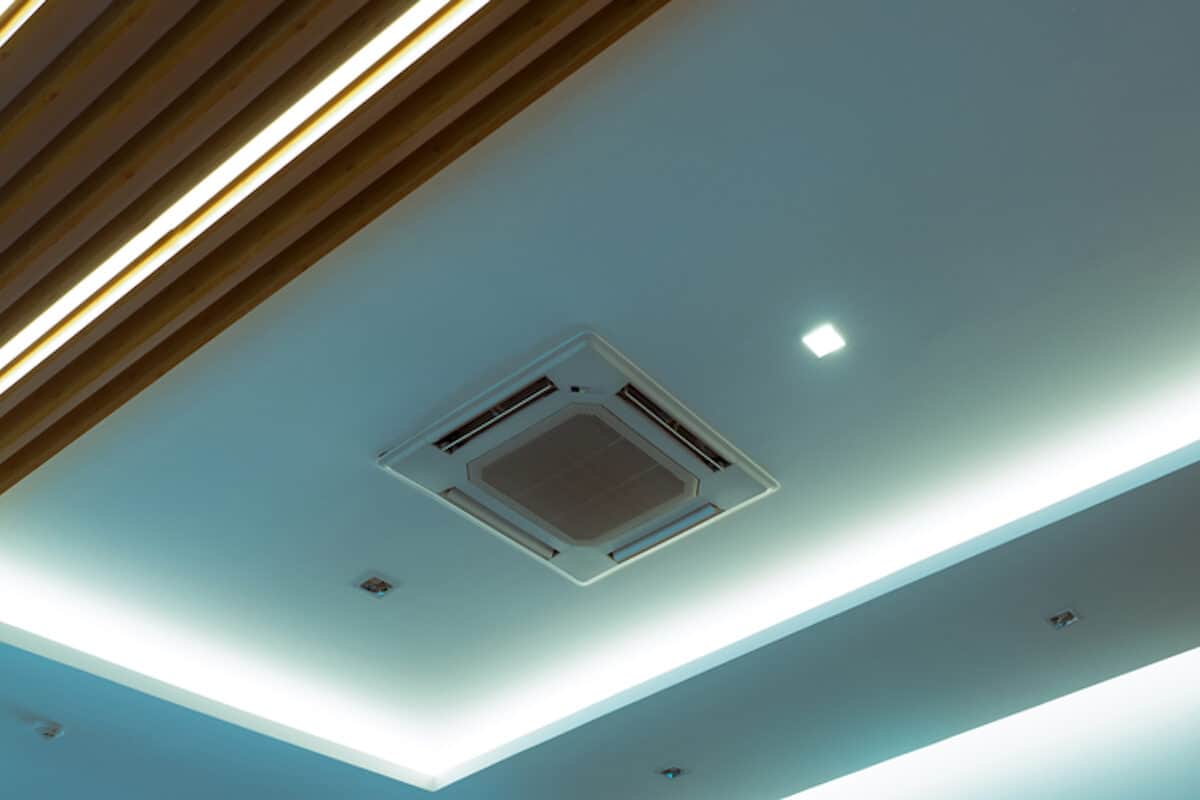
Ceiling cassette mini splits are installed inside the ceiling cavity, so only the decorative grille is visible. This makes them the most discreet option, blending seamlessly into the ceiling for a flush, built-in appearance.
Key features:
- Fits between standard ceiling joists (usually 2×2 feet)
- Offers 360° airflow or directional vents depending on the model
- Quiet operation with indoor sound levels as low as 24–35 dB
- Often includes built-in condensate pumps for drainage
Installation requirements:
- Minimum vertical ceiling clearance of 10–14 inches
- Ideal for drop ceilings or homes with attic space above
- Requires routing of refrigerant lines, drainage, and power through ceiling
Ceiling cassette mini splits are best for open living rooms, kitchens with minimal wall space, offices and commercial settings.
Not many people are familiar with ceiling cassette units. So, I’ve made a video to explain the working principle. If you’re interested to know what’s going on inside the unit, check it out below.
For even more details, check out my post on how ceiling cassette mini splits work.
Working on an Actual HVAC Project or System Issue?
This guide can help you understand the concept, but real HVAC decisions often depend on site conditions, drawings, equipment selection, airflow, installation quality, and project requirements. If you need project-specific advice, design review, or troubleshooting support, view my HVAC engineering support options.
Want to learn HVAC in a structured way? Start Learning HVAC.
Ceiling Suspended Mini Splits (Surface-Mounted Type)
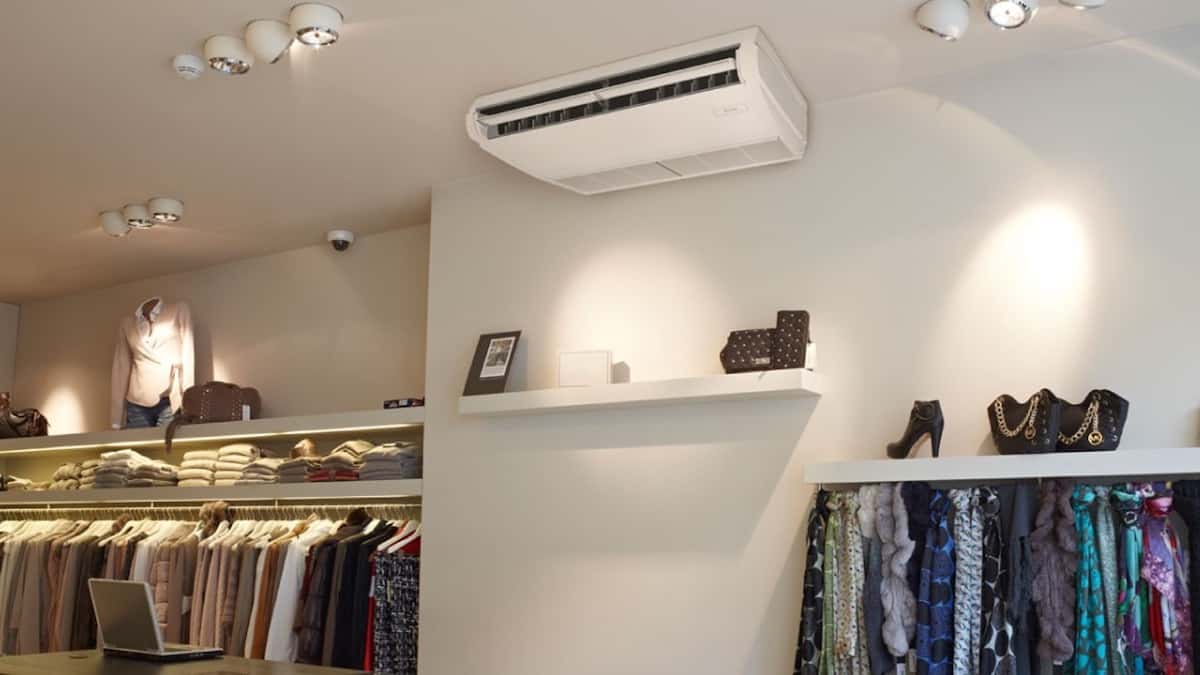
Unlike cassette units, suspended mini splits are mounted directly onto the ceiling surface, making them a practical solution when there isn’t enough clearance above the ceiling for a recessed install. Some manufacturers offer a floor-mounted mini split that can be converted into a suspended version.
Key features:
- Slim, low-profile design (usually 8–12 inches thick)
- Directional airflow with strong throw — ideal for large or high-ceiling rooms
- Easy access for maintenance and filter cleaning
Installation requirements:
- No ceiling cavity required — installed like a light fixture
- Needs open space near ceiling for mounting and airflow
- Still requires refrigerant and drain line routing along ceiling or down the wall
Ceiling suspended mini splits are best for high-ceiling garages or workshops, commercial halls and showrooms, rooms without attic access or drop ceilings.
Advantages of a Mini Split in the Ceiling
Installing a mini split in the ceiling offers several advantages, especially for those prioritizing aesthetics and space optimization. One of the biggest benefits is the discreet appearance.
Ceiling-mounted units remain largely out of sight, blending seamlessly into the room’s design without disrupting wall space. This makes them a great option for modern homes or areas with built-in cabinetry, large windows, or minimal wall clearance.
Another major advantage is their ability to distribute air more evenly, particularly in larger or open-concept rooms. Ceiling cassettes, in particular, offer 360-degree airflow, allowing for consistent temperature control across the space.
In terms of comfort, these systems maintain the same quiet operation that ductless mini splits are known for, making them suitable for bedrooms, offices, and living areas where noise is a concern.
Overall, ceiling-mounted mini splits combine performance with a clean, unobtrusive look that complements a wide variety of interiors.
Wall-Mounted vs Ceiling-Mounted Mini Splits: What’s the Difference?
While wall-mounted units are the most common type of mini split system, ceiling-mounted options offer distinct advantages in design and airflow. The table below compares the two to help you decide which setup is best for your space.
| Feature | Wall-Mounted Mini Split | Ceiling-Mounted Mini Split |
|---|---|---|
| Visibility | Moderate – unit is always visible | Low – recessed or flush with ceiling |
| Airflow Direction | One-directional (horizontal throw) | 360° or wide-angle distribution |
| Room Size Fit | Best for small to medium rooms | Ideal for medium to large rooms |
| Installation Complexity | Simple – wall bracket & low piping | Higher – requires ceiling access |
| Aesthetic Impact | Functional but visible | Discreet and integrated |
| Ceiling Clearance Needed | No | Yes (10–14 inches typical for cassette) |
| Maintenance Access | Easy – direct access | May require step ladder or lift |
| Cost to Install | Lower | Higher (labor & ceiling work involved) |
Ceiling-mounted units are ideal when aesthetics, airflow coverage, or wall space limitations are a concern. Wall-mounted systems, on the other hand, are more affordable and easier to install, making them a practical choice for most standard applications.
To better understand how each system looks and performs in a real space, here’s a visual comparison between a traditional wall-mounted mini split and a recessed ceiling-mounted unit. Both offer efficient cooling, but their design, airflow pattern, and room impact are quite different.
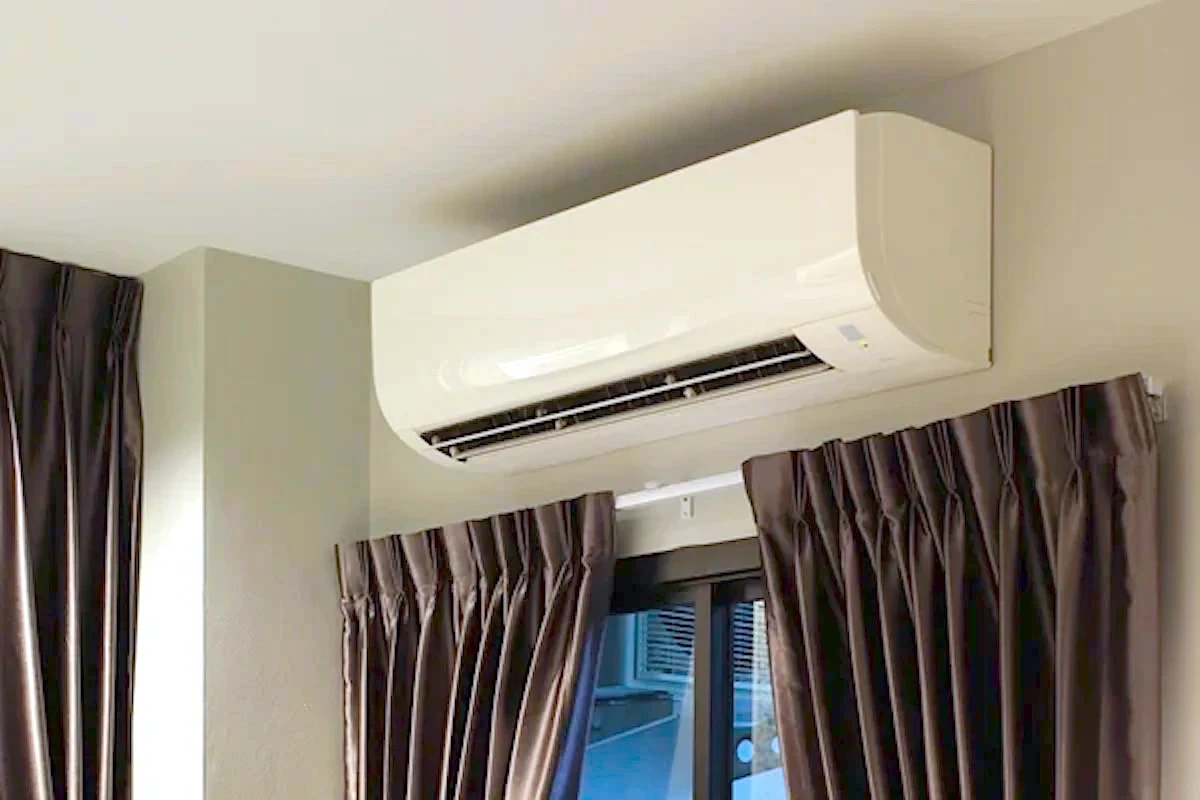
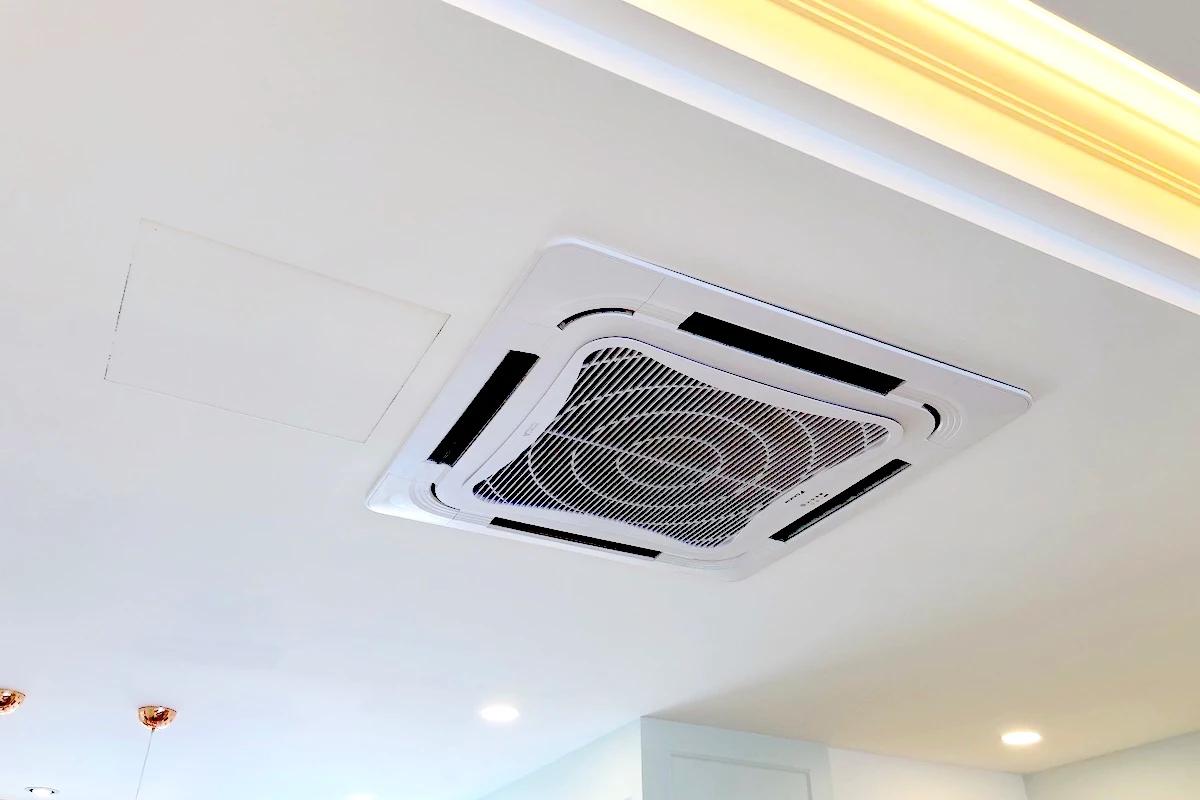
From my past experiences, homeowners like the idea of a ceiling cassette when they have an open living, dining and kitchen area. Not only does it improves the aesthetic of the living room, but it also makes the air circulation better.
What to Consider Before Choosing a Ceiling-Mounted Unit
While ceiling mini splits are a smart option for many, they do come with added complexity. Here are the most important factors to keep in mind:
- Ceiling Space Requirements: Cassette units require about 10–14 inches of vertical clearance above the ceiling.
- Access for Drain and Line Routing: Drainpipes and refrigerant lines must be routed through the ceiling or attic. Access panels may be needed.
- Installation Cost: Ceiling-mounted systems are typically more expensive to install than wall units due to the labor involved.
- Service and Maintenance: Filters still need to be cleaned regularly. Make sure there’s accessible space for maintenance.
Best Applications for Ceiling-Mounted Mini Splits
Ceiling mini splits are especially useful in spaces where wall-mounted units would disrupt the layout or design. In living rooms with vaulted ceilings, the recessed design keeps equipment out of sight while providing even air distribution.
Bedrooms with built-in wardrobes or limited free wall space benefit from the discreet installation as well. In kitchens, where cabinetry often occupies entire walls, ceiling units are a practical and aesthetic solution.
These systems also work well in basements, home gyms, and professional spaces where a clean ceiling-mounted option is preferred.
Performance and Efficiency
Ceiling-mounted mini splits perform just as well as their wall-mounted counterparts. Most models deliver high efficiency with inverter technology and SEER ratings between 18 and 21, depending on the brand and size.
Some key points of ceiling-mounted units:
- Airflow is typically more even and centralized
- Noise levels remain very low (as with all mini splits)
- Temperature control remains zone-specific, just like wall units
However, high-end wall-mounted mini splits can achieve beyond 24 SEER, beating ceiling units but they’re also much more expensive. If you’re not stepping into the premium section, the performance and efficiency of both types are pretty much the same. If you’re looking for maximum efficiency, check out my list of most efficient mini splits.
Installation Cost: What to Expect
Installing a ceiling mini split will usually cost more than a wall-mounted system, largely due to the extra labor and structural work involved.
| Unit Type | Estimated Installed Cost (Per Zone)* |
|---|---|
| Recessed Ceiling Cassette | $3,000 – $6,500 |
| Surface-Mounted Suspended | $2,500 – $5,000 |
*Additional costs may apply if: a) electrical upgrades are needed, b) access to ceiling cavity is limited and c) drainage and condensate pumps are required.
Final Thoughts
A mini split in ceiling is an excellent option for anyone looking to combine energy efficiency with subtle, space-saving design. Whether you go for a recessed cassette or a ceiling-suspended unit, these systems offer quiet, effective heating and cooling without dominating your wall space.
For modern homes or renovations where design and function must go hand in hand, ceiling-mounted mini splits are a smart and stylish HVAC solution.
Need HVAC Engineering Support for Your Project or System?
If you are planning an HVAC installation, reviewing a contractor proposal, checking a design, or troubleshooting a real system issue, I provide practical HVAC advisory, design documentation, and selected on-site assessment support.
Want structured courses, membership, corporate training, or 1-to-1 mentorship? Start Learning HVAC.
FAQs
Here are answers to some of the questions you might have:
Can a mini split be installed in a vaulted ceiling?
Yes, mini splits can be installed in vaulted ceilings, but they typically require a surface-mounted ceiling-suspended unit instead of a recessed cassette. These units attach directly to the ceiling and are ideal for high or sloped ceilings where attic space is limited.
How much clearance is needed for a ceiling cassette mini split?
Most ceiling cassette mini split units require 10 to 14 inches of vertical clearance above the ceiling for proper installation. This space accommodates the air handler, drain piping, and refrigerant lines. Always check manufacturer specifications for exact requirements.
Are ceiling mini splits quieter than wall-mounted units?
Both ceiling and wall-mounted mini splits are designed to operate quietly. Ceiling cassette units often have noise levels in the range of 24–35 dB, comparable to wall units. The perceived noise may be lower with ceiling units due to their more central location and the facts that the ceiling is blocking some of the noise.
Do ceiling-mounted mini splits work as efficiently as wall units?
Yes, ceiling-mounted mini splits are just as energy-efficient as standard wall-mounted versions. They use the same inverter compressor technology and typically achieve SEER ratings between 18 and 21, depending on the model and system size. However, high-end wall-mounted mini splits can achieve beyond 24 SEER, beating ceiling units.
Can I replace a wall-mounted mini split with a ceiling-mounted unit?
Replacing a wall unit with a ceiling-mounted mini split is possible, but it often requires new refrigerant line routing, electrical work, and sufficient ceiling cavity space. It’s best handled by a licensed HVAC installer after evaluating your ceiling structure and access points.