
High Humidity in House: How to Fix AC High Humidity?

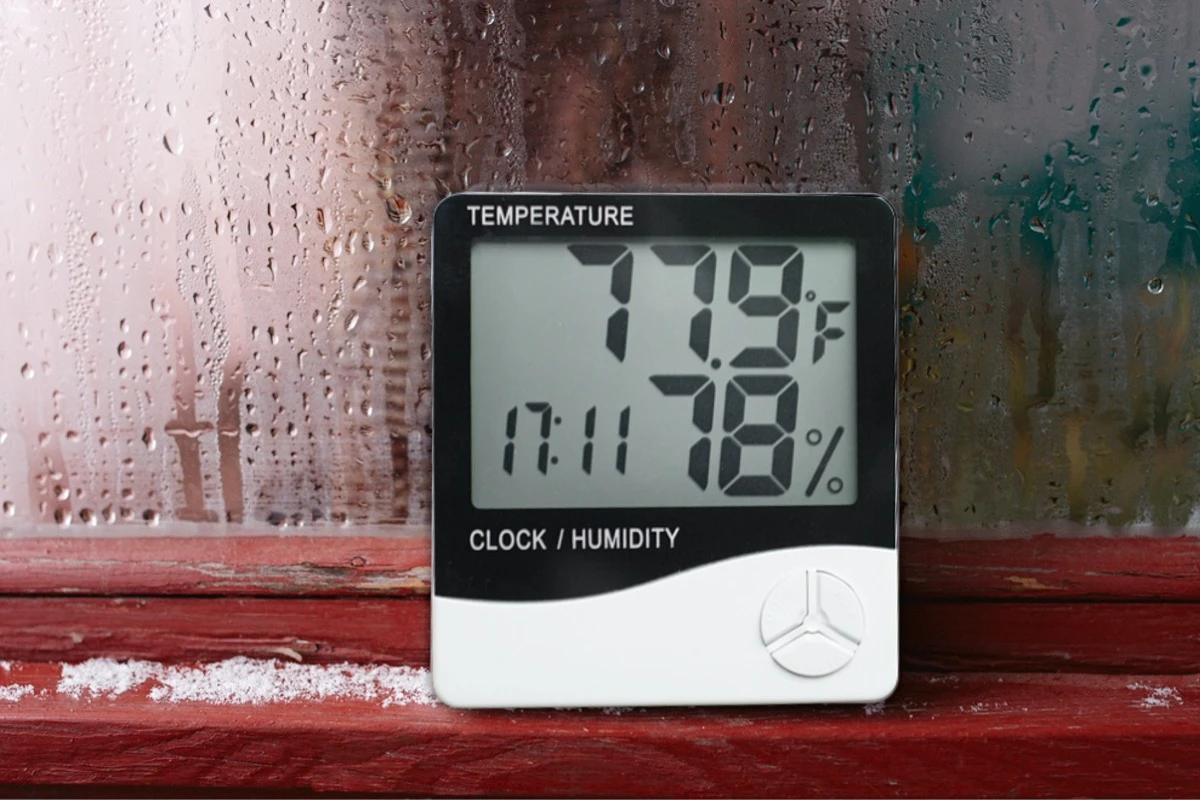
High humidity in house is a serious problem, but sometimes hard to fix because it can quickly become a technical issue, especially when it involves your AC system, which it often does. If you’re facing high humidity in house with AC running, this post could lead you to the right solution.
High humidity in house is often due to outside humid air entering the house without passing through the AC system for moisture removal. Even if it does, a degraded AC system may not be able to dehumidify the air properly, leading to a persistent high humidity problem in house.
Many homeowners feel like the culprit is their HVAC system. But, they are not sure about the technicality and relationship between humidity and their HVAC system. So, I’ll explain how humidity works and why the AC system could be the cause.
Why High Humidity in House with AC Running?
Air conditioning systems are designed to remove moisture, thereby reducing the humidity in house. They cool the air down and beyond its dew point to force condensation, where the water molecules within the air turn into liquid form (which is then caught by the drain pan and discharged out through the condensate pipe).
AC Cooling Coil Problem
ACs are supposed to reduce humidity. But, if the cooling coil of the AC is warmer than it is supposed to be, then less moisture will be extracted and the humidity level in the house will be higher.
Below is a typical air conditioning process illustrated on a psychrometric chart (air properties graph):

The above graph shows a typical air conditioning process. The AC supplies cold air at around 51.5°F to the house. After the cold mixing with the warm air in the house, the room temperature stabilises at 75°F and the relative humidity at 50%. The room air returns to the AC and the process continues.
The process from the red dot (room temperature) to the teal dot (supply air temperature) is where the air returns to the AC and passes through the cooling coil. The air is first cooled to its dew point and then condensation (the moisture removal process) starts.
Now, if the cooling coil is warmer than it should be (eg: due to dirty coil, incorrect refrigerant level, etc.), the moisture removal process shortens. Subsequently, the supply air temperature increases. You may notice the room temperature increases (not cold enough).
However, given enough airflow, the room temperature may still achieve 75°F, but the relative humidity increases to 65%, as shown in the below graph.

From the two graphs, you can also see that the “triangle” in the poor AC is much smaller than the normal AC, indicating lower capacity and efficiency.
That’s why some people experience the room temperature is cold, but the humidity level is high (feeling sticky or stuffy). The AC coil temperature is simply not low enough for adequate moisture removal.
Outside Air Infiltration
Outside air is more humid than the AC-conditioned indoor air. Many blowers are located in the attic. If the attic is not sealed properly and outside air is drawn into the AC unit, a high humidity problem could happen.
Normally, air conditioners are designed to process a certain amount of outside air (eg: 5-10% of its supply airflow). However, if there is too much outside air coming into the AC, the cooling coil may not be able to process all that extra humidity.

The above graph shows the AC cooling coil has no problem, but the outside air is causing high humidity in house. The AC has the same moisture removal capacity as the normal AC shown earlier. However, due to the outside air mixing with the return air, the air temperature going into the cooling coil is much higher (dew point 64°F vs 55°F).
As a result, the supply air temperature once again increases. Similarly, given enough airflow, the room may still be cold enough, but the humidity level stays elevated.
Notice that the AC capacity and efficiency (the triangle) are similar to the normal AC. This implies that even if an AC is properly sized and working as well as a good unit, unwanted outside air infiltrating into the AC system will still lead to high humidity in house.
Negative Pressure
Houses that have a centralized exhaust system for all toilets may face negative pressure issues, which draw unwanted outside air not just into the AC system but directly into the house through door gaps and wall cracks, leading to high humidity in house.
Working on an Actual HVAC Project or System Issue?
This guide can help you understand the concept, but real HVAC decisions often depend on site conditions, drawings, equipment selection, airflow, installation quality, and project requirements. If you need project-specific advice, design review, or troubleshooting support, view my HVAC engineering support options.
Want to learn HVAC in a structured way? Start Learning HVAC.
What Causes High Humidity in House?
Apart from the AC problem, high humidity in house can also be due to several other reasons. Sometimes, when the high humidity problem occurs (the timing) can tell us the possible cause.
High Humidity in House During Summer
During summer, the outside is hot and humid. Physics 101, the warmer the air, the greater its capability to hold moisture. So, when the air temperature is high, there are more vapor particles in the air.
If you always have high humidity in house during summer, then you may have outside air infiltrating into your house. This is assumed that your AC system is working properly (eg: no AC cooling coil problem).
Similarly, if your house is constantly in a negative pressure state, outside air is constantly being drawn into your house through available gaps and cracks.
Some people may have minor outside air infiltration where their AC system is still able to handle the moisture and keep the humidity level reasonably low. However, if the outside air infiltration is greater than the AC capability, then high humidity in house is inevitable.
High Humidity in House During Winter
During winter, the outside air is cold and dry. Again, cold air holds less moisture than warm air. The cold outside air actually has fewer vapor particles in it.
Since outside air is dry, if you have high humidity in house during winter, the moisture is coming from within your house (eg: moisture emitted by yourself, cooking, cloth drying, toilet, condensation, etc.).
In winter, your HVAC system switches into heating mode, where there is no moisture removal process. Remember, moisture extraction only happens when the air is cooled to its dew point.
If so, then why don’t other people have such a problem?
The answer could be that your house is super sealed and has no ventilation. In this case, the moisture produced within your house stays in your house. There’s no outside dry air to help dilution and reduce the humidity level.
High Humidity in House During Rain
During rain, the outside air humidity level is at its all-time high. Any outside air infiltration (whether it is drawn into your AC or directly into your house) will surely increase your house’s humidity level.
If you have minor outside air infiltration, your AC system may be able to handle the extra moisture when there’s no rain, as the outside air is less humid. During rain, the outside air contains a lot more moisture to a point where the AC can no longer control the humidity level within the comfort zone.
Not to mention, during rain, the heat load is lower. Your AC system will ramp down or shut off more often. As a result, there’s less moisture removal and therefore, high humidity in house during rain.
High Humidity in House at Night
If you have high humidity in house at night only, then your AC system may be oversized.
At night, the heat load is low. If your AC system is oversized, it will ramp down or shut off a lot more often. If it is a variable-speed compressor, the cooling coil temperature may increase.
All these actions make the room temperature controllable at 73-75°F, but the high coil temperature and frequent shut off make no time for the AC to dehumidify, leading to high humidity in house at night.
How to Fix High Humidity in House?
After knowing the potential causes of high humidity in house involving AC problems and non-AC problems, the solution is clearer. Below actions could help you fix the high humidity in house problem:
Check and Clean AC Cooling Coil
As explained earlier, anything that could cause the AC cooling coil to be warmer than it should be will lead to high humidity in house. So, you must make sure the AC is not the problem before moving on to other solutions.
A warm AC cooling coil is commonly due to a dirty coil and fins. When a significant amount of dust is gathered on the coil, the heat transfer reduces. The AC condenser may still be churning out cold refrigerant, but the energy is not transferred over efficiently.
Another potential cause of a warm AC cooling coil is too much refrigerant or a wrong refrigerant mixture. If the refrigerant put into the system is not proper (eg: no vacuum out the vapor, simply pump in extra R410A, causing an uneven mixture, etc.), the refrigerant temperature in the cooling coil could be high.
If the refrigerant temperature is high, less moisture will be extracted from the air, leading to high humidity in house.
Seal the House and Provide Ventilation
We know that outside air infiltration contributes a lot to the high humidity problem in house. Hence, sealing the house tightly is critical to prevent unwanted outside air from coming into your house.
However, as mentioned earlier, a super-sealed house without ventilation may have high humidity in house during winter. As such, while you’re sealing the house, do also provide ventilation by means of letting 5-10% of outside air into your heat pump system if that’s possible.
Alternatively, install a controlled ventilation system such as an energy recovery ventilator (ERV) and use the outside dry air (during winter) to control the humidity level in your house.
You can also open the window a little to achieve the same goal in winter. However, this will bring in more humid air during summer. A heat pump system with outside air intake will make humidity control easier.
Control the Air Pressure in House
If you have a centralized toilet exhaust system, make sure you are also bringing in the outside air. The amount of outside air should be equal to the total exhausted air so that your house air pressure is balanced or neutral.
However, if you stay in a summer-dominant climate, you can consider slightly pressurizing your house to ensure no unwanted outside air infiltration. This can be achieved by making the outside air intake slightly more than the exhaust air.
Need HVAC Engineering Support for Your Project or System?
If you are planning an HVAC installation, reviewing a contractor proposal, checking a design, or troubleshooting a real system issue, I provide practical HVAC advisory, design documentation, and selected on-site assessment support.
Want structured courses, membership, corporate training, or 1-to-1 mentorship? Start Learning HVAC.