
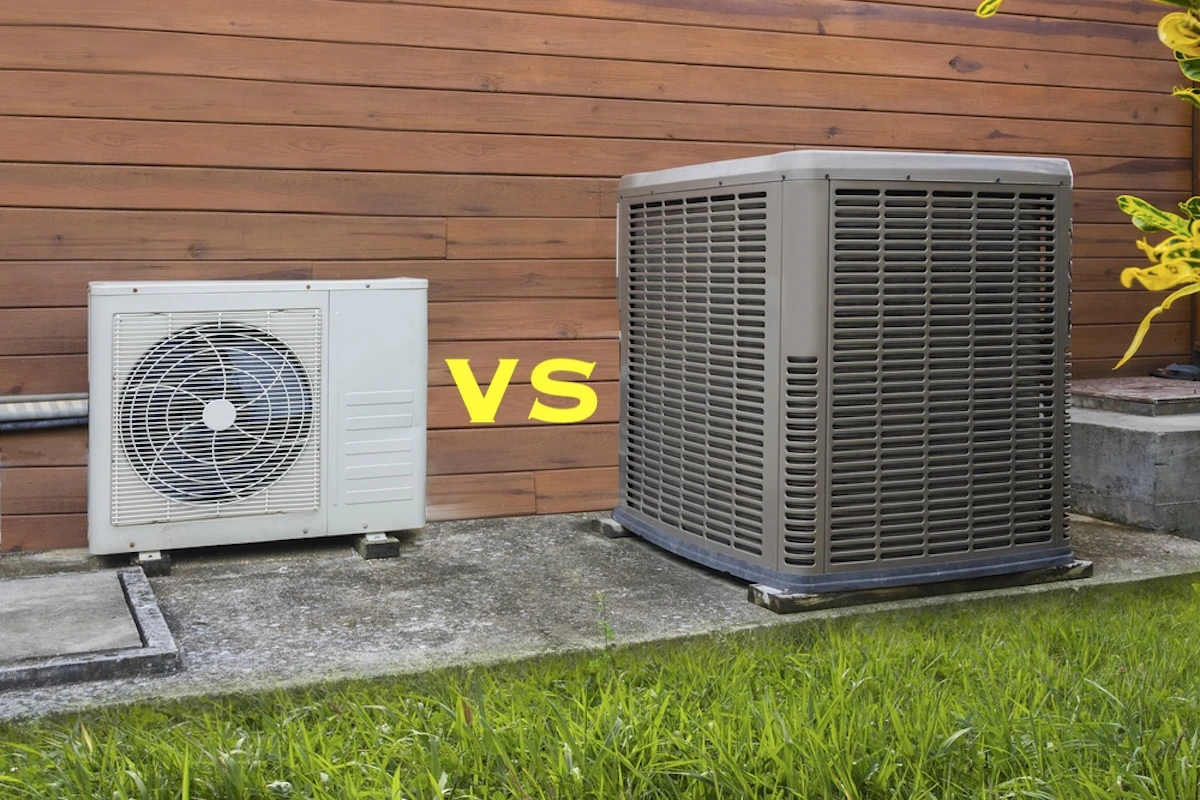
Mini Split vs Heat Pump: What’s the Difference?

Mini split and heat pump are two common terms used in residential HVAC systems. They are referred to as two different systems, but in certain cases, they can be comparable. In this post, I’ll explain the difference between mini split and heat pump.
In short, mini split refers to a type of heating and cooling system that has a typical capacity range from 6k to 24k BTU with separated indoor and outdoor units. Heat pump refers to any system that uses the refrigeration cycle to move heat from outdoor to indoor for heating.
The terms mini split and heat pump are often used interchangeably, which causes confusion among homeowners and even some professionals. Here is how to differentiate them and where is best to use them:
What is a Mini Split?
A mini split is comprised of one indoor unit and one outdoor unit. The indoor unit is also referred to by many as “head unit” or “air handler”. If there’s only one indoor unit connected to one outdoor unit, it is called a single-zone mini split system.
If there are multiple indoor units connected to one outdoor unit, it is called a multi-zone mini split system. The minimum indoor unit is typically two, up to a maximum of five, depending on the manufacturer.
The function of a mini split is to heat and cool a space. Most of the mini splits on the market offer both heating and cooling capability. Only a few brands offer cooling-only models.
The capacity of a mini split is categorized by the cooling capacity of the indoor unit. It typically starts from 6000 BTU and goes up to 24000 BTU. Some brands offer up to 36000 BTU, but it is more niche.


For the single-zone mini split system, the capacity of the outdoor unit equals the capacity of the indoor unit since it is one to one. For the multi-zone mini split system, the capacity of the outdoor unit is often the sum of the capacity of the connected indoor units.
For example: 9K + 9K + 18K = 36K. Meaning, there are three indoor units, each with a capacity of 9000 BTU, 9000 BTU and 18000 BTU, respectively. They are connected to one outdoor unit which the capacity of the outdoor unit is 36000 BTU. A multi-zone mini split outdoor unit can go up to 48000 BTU.
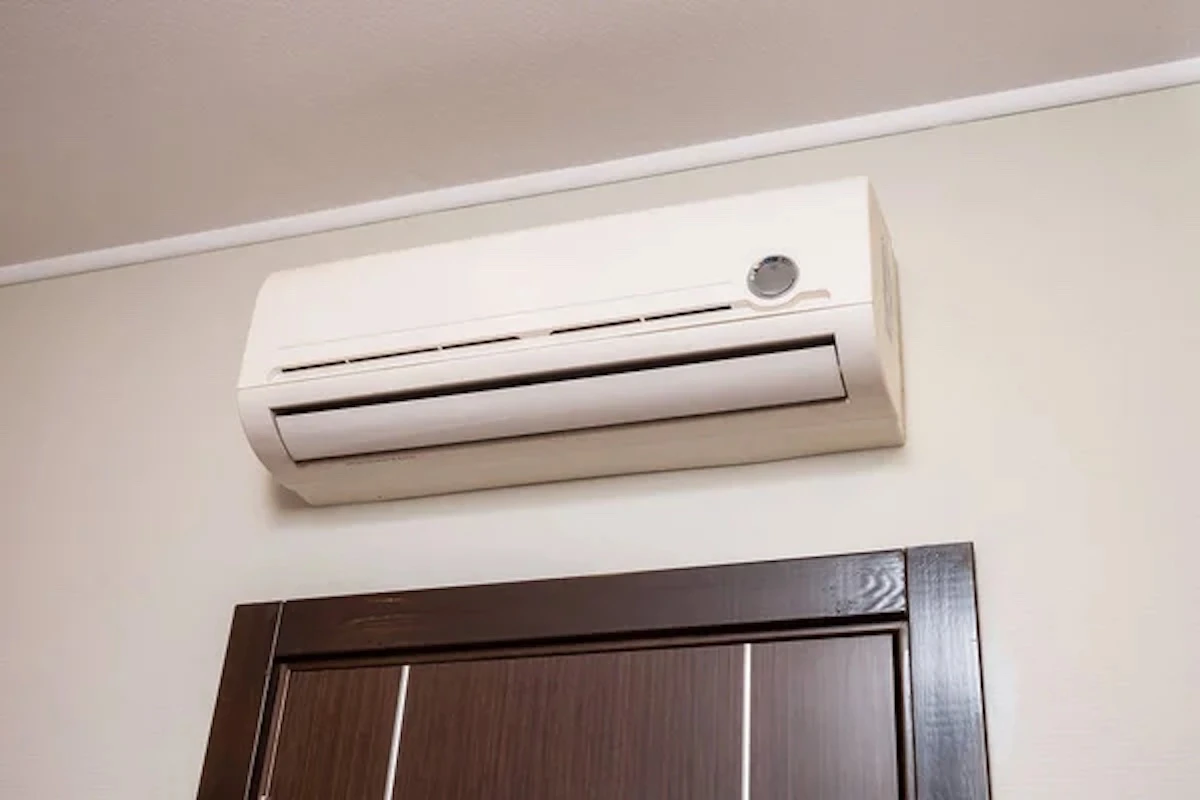
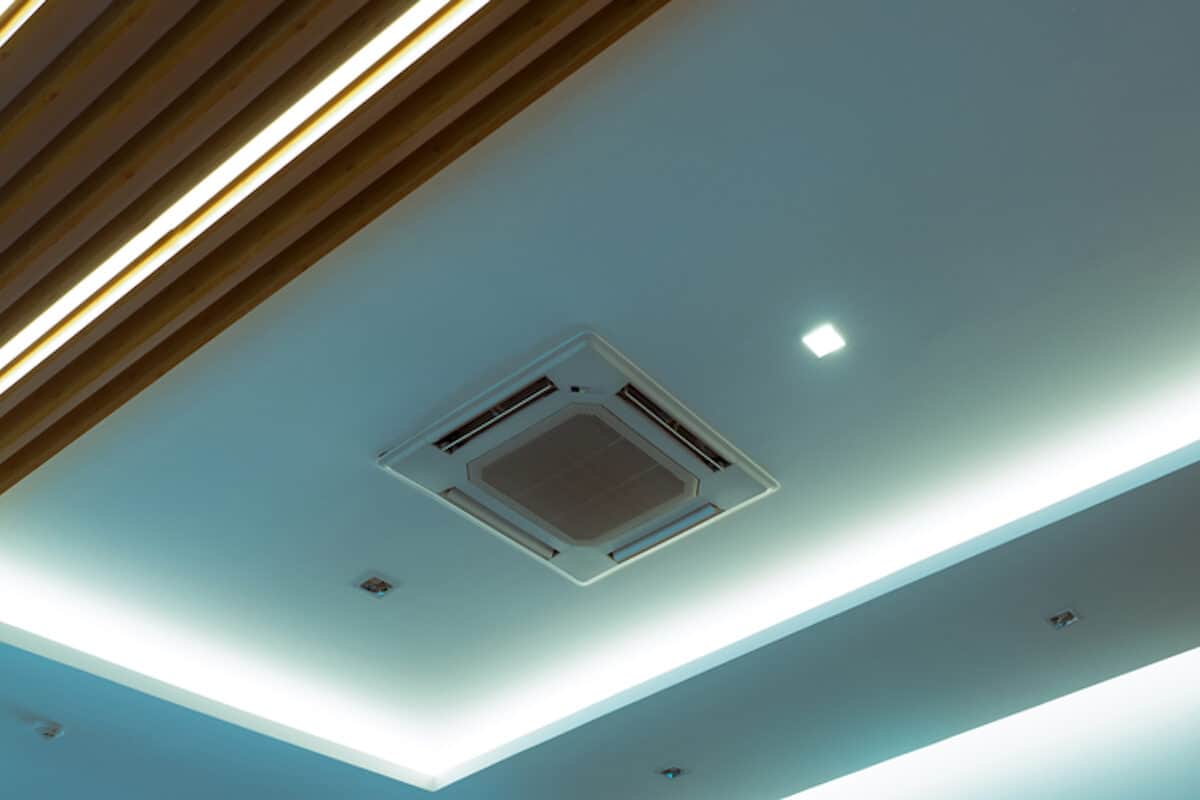
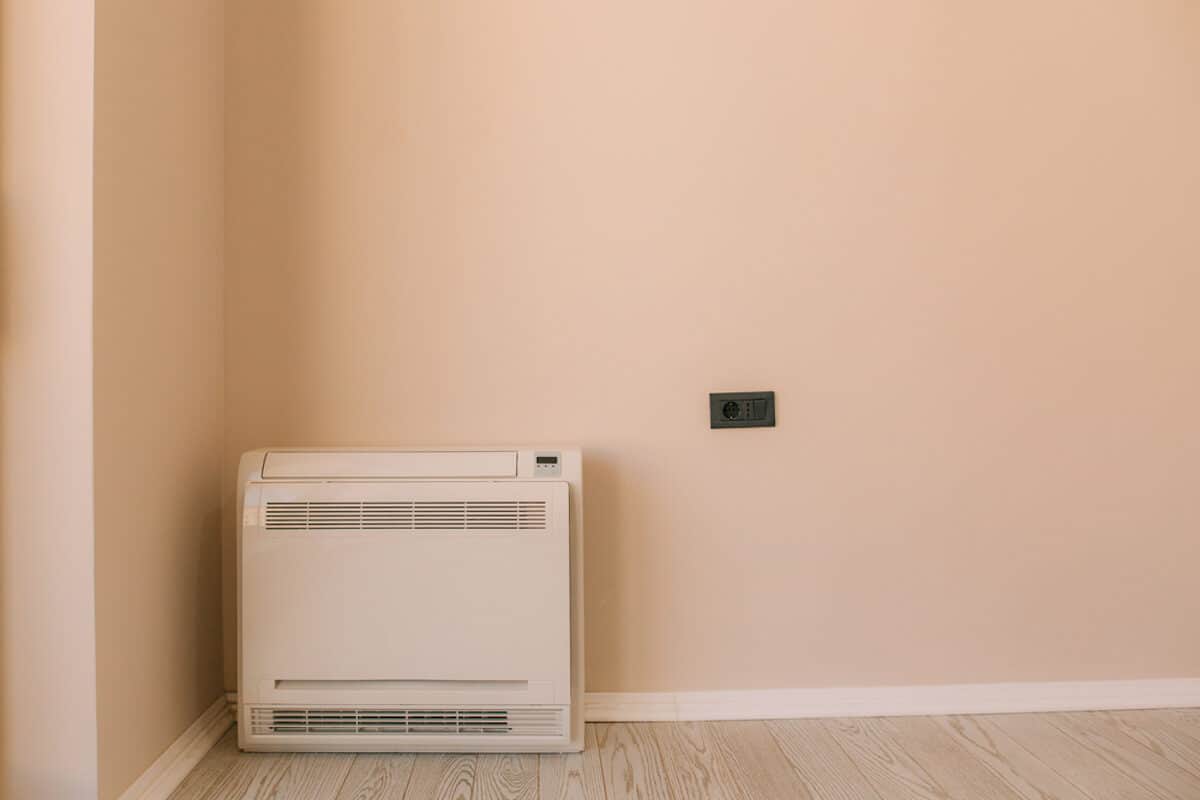
The indoor unit of a mini split can be “ductless” or “ducted”. For ductless, the indoor unit comes in several form factors. Some of them are called wall-mounted, ceiling cassette and floor standing. For ducted, the indoor unit is typically called ceiling ducted or concealed ducted.
What is a Heat Pump?
A heat pump can be any system that moves heat from outdoor to indoor for heating. For example, a mini split heat pump can provide heating during cold seasons. It is called heat pump because the mini split reverses its refrigeration cycle to heat instead of cool.
A traditional 4-ton or 5-ton HVAC system can also be a heat pump. If a house uses the condensing unit to bring heat from outdoor to indoor instead of relying on its boiler or furnace, then the house is using a heat pump system. The condensing unit is a heat pump.
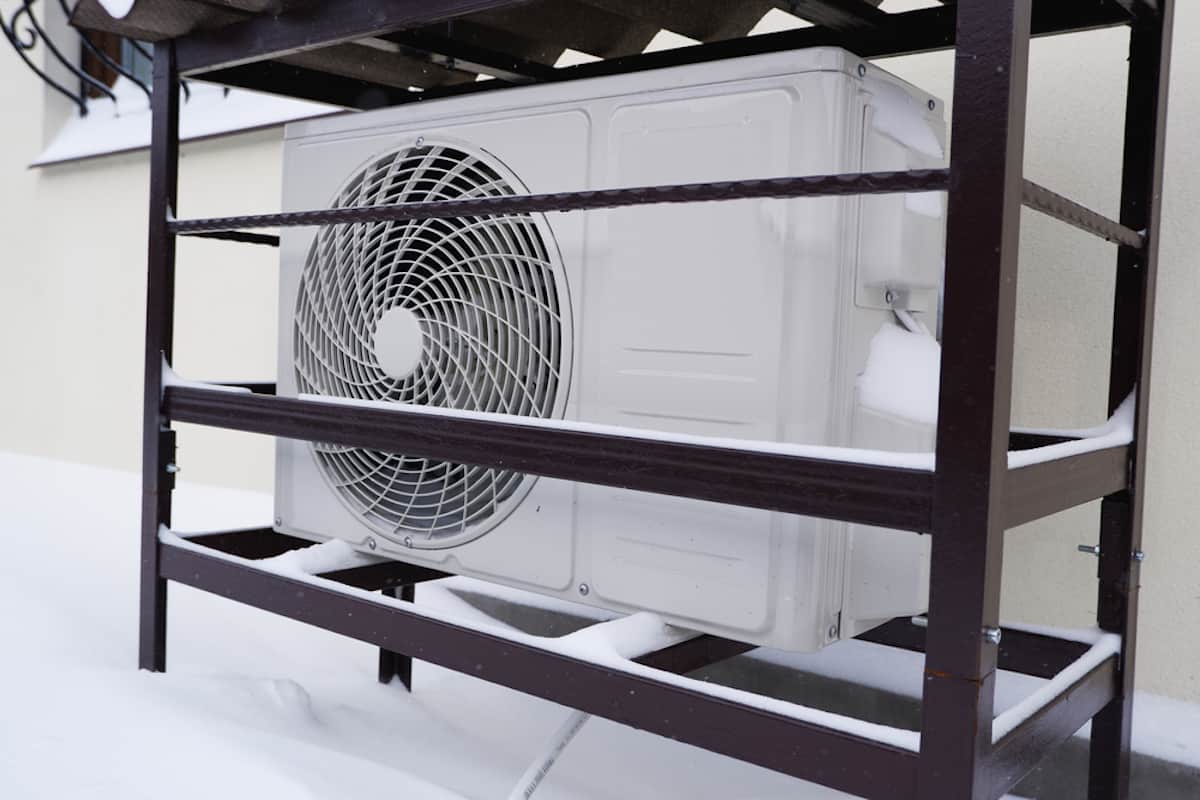
There are several types of heat pumps. The mini split heat pump and the 4-ton heat pump mentioned earlier are technically known as air-source heat pumps. This type of heat pump “source” or extracts heat from the ambient air.


Another type of heat pump is called water-source heat pump. As the name suggests, this type of heat pump extracts heat from water. It is rare in houses but common in commercial buildings, where the heat pump extracts heat from the condenser water to save energy and helps improve the chiller’s efficiency.
Ground source heat pump is another type of heat pump where heat is extracted from the earth’s ground. This type of system is less common due to high cost, land space and complexity.
Heat pump dryers and heat pump water heaters are also a type of heat pump. The former extracts heat from the ambient air to heat and dry clothes, while the latter heats water.
All and all, if a system uses the refrigeration cycle to provide heating, whether it is heating a home, a water heater or drying clothes, it is a heat pump.
Pros & Cons of Mini Splits
Mini splits are a form of heat pump. Hence, the pros and cons of mini splits are mainly about small-capacity systems with different form factors for the indoor unit.
Pros:
- Flexible operation: You install one mini split in each room and turn off units that are not needed.
- Energy efficiency: Due to their form factor, mini splits are extremely efficient with a high SEER rating.
- Great for renovation/extension: You add one or two mini splits for your additional rooms instead of changing your central air unit and modifying your ductwork.
Cons:
- More parts to maintain and service: You need to service 3-5 mini splits compared to one central air unit.
- Visible head unit: Central air uses air vents that are almost invisible, but mini splits are hanging on your wall.
- Many outdoor units: If you have 3-5 mini splits, you need to put the same number of outdoor units outside your house, which can be unappealing, though you can reduce it to one unit with a multi-zone system.
Compared to a centralized whole-house heat pump system, mini splits offer more flexibility in all aspects. However, they appear to be less “premium” as there will be multiple head units hanging around your house.
Pros & Cons of Heat Pump
Although heat pumps have many types and even overlap with mini splits, we can compare a whole-house heat pump system (like your central air 4-tons or 5-tons) to a whole-house mini split system.
Pros
- Centralized system: You only need to maintain and service one system instead of 3-5 systems.
- Invisible air vents: A centralized heat pump uses ductwork and air vents, which are more aesthetically appealing than multiple mini split head units.
- Easy operation: You turn it on once, and the entire house is heated.
Cons
- Less energy efficient: A standard heat pump is often less efficient than a standard mini split, not to mention the energy loss from ductwork. High-efficiency heat pumps are costly.
- High initial cost: A centralized heat pump system requires extensive ductwork, which is more expensive to build than simply using multiple ductless mini splits.
- Struggle in extreme cold: Heat pumps extract heat from outdoor air. In extremely cold regions, heat pumps are either unable to operate, operate with reduced capacity, or operate inefficiently.
Compared to multiple mini splits in a house, a single heat pump unit offers a better experience in terms of operation and control. It feels more complete. However, you can’t choose where to heat, unlike mini splits.
Final Thought
Mini splits are a type of HVAC system that incorporates the heat pump technology. In cooling mode, they run the refrigeration cycle to transfer heat from indoor to outdoor. In heating mode, they reverse the process.
Heat pumps are units with the ability to heat using the refrigeration cycle, which is more energy efficient than electric heaters and more environmentally friendly than boilers and furnaces.